About us
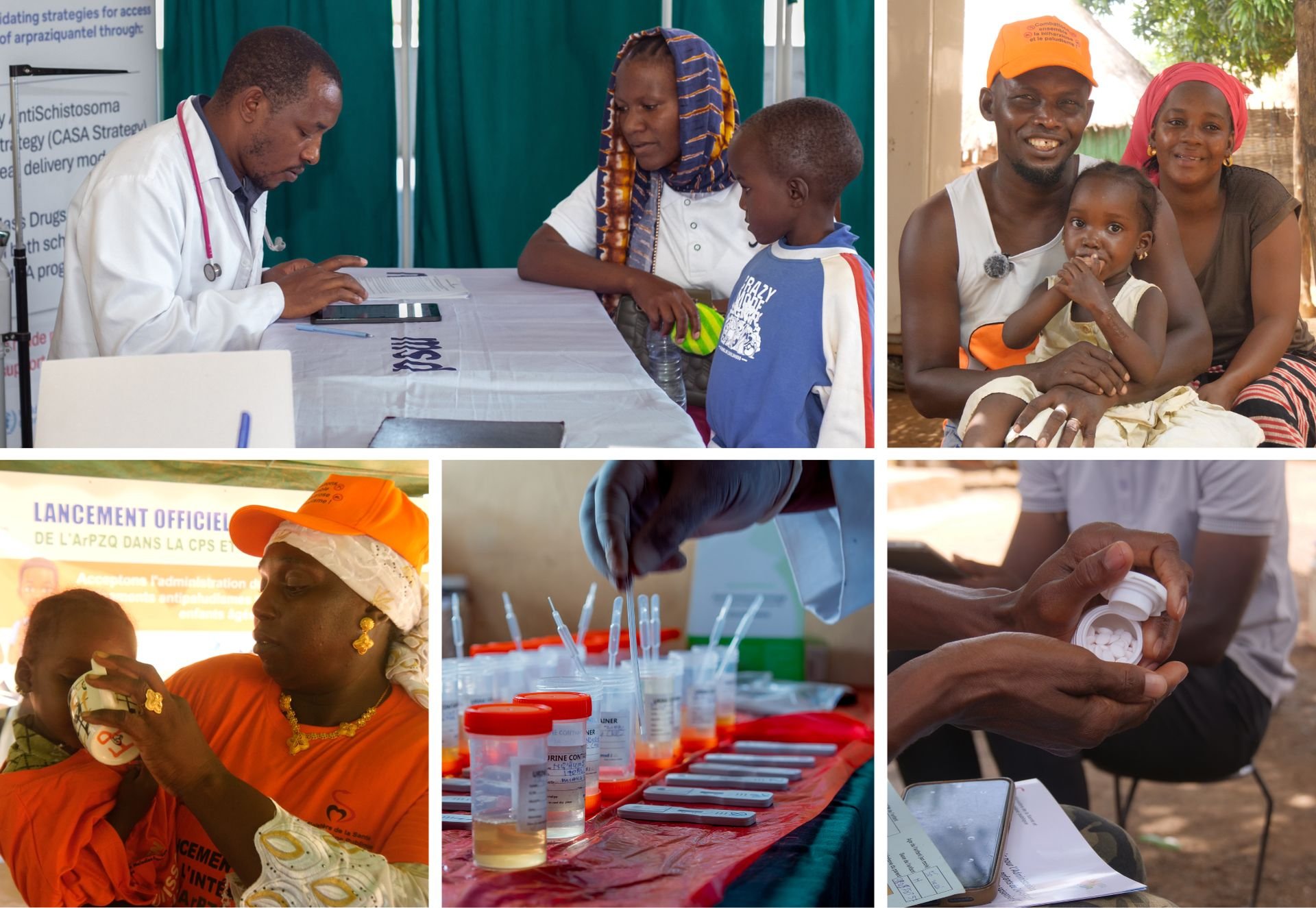
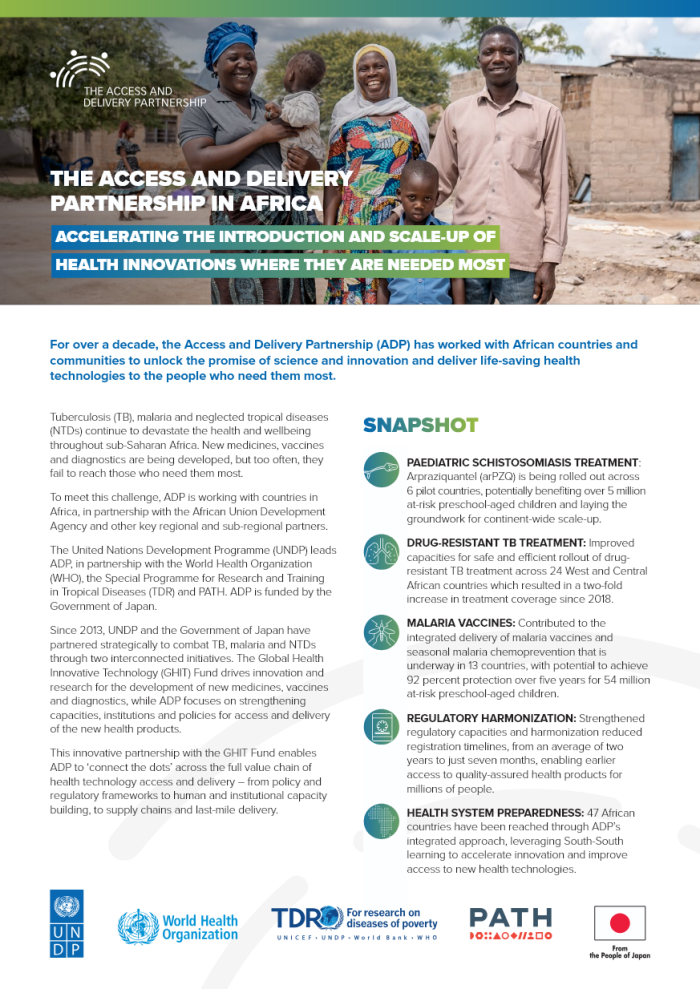
ADP works to ensure that people in low- and middle-income countries have access to life-saving health technologies – medicines, vaccines and diagnostic tools – with an emphasis on those technologies that address tuberculosis, malaria and neglected tropical diseases.
The partners
ADP brings together the United Nations Development Programme (UNDP), the World Health Organization (WHO), the Special Programme for Research and Training in Tropical Diseases (TDR) and PATH in a unique partnership that helps identify and strengthen capacity gaps in low- and middle-income countries in an innovative and integrated way.
- Strengthening national health systems
- Supporting national responses to COVID-19
- Regional, Global and South-South cooperation
- Focus countries
- Uniting Efforts
Strengthening national health systems
In line with the overarching approach of the 2030 Agenda for Sustainable Development, ADP adopts a systemic and integrated perspective towards health system strengthening, aimed at the interlinked targets of eliminating communicable and infectious diseases and achieving real progress towards universal health coverage.
Supporting national responses to COVID-19
The COVID-19 pandemic has highlighted the critical importance of ensuring equitable access to health services, as well as increasing availability of medicines, vaccines and diagnostic tools in response to established and emerging health threats.
Regional, Global and South-South cooperation
Focusing on common challenges across different health systems, ADP leverages the experiences and expertise of its network of stakeholders to deliver both policy lessons and technical solutions.
Focus countries
ADP collaborates with stakeholders in a number of focus countries – Bhutan, Burkina Faso, Ghana, India, Indonesia, Malawi, Senegal, United Republic of Tanzania and Thailand
– to implement a range of capacity-strengthening interventions, which are in line with the ADP strategic approach of leveraging the expertise of its four core partners and working across sectors to help strengthen and harmonize policies, regulations and systems, as well as build the capacities of key people and institutions.
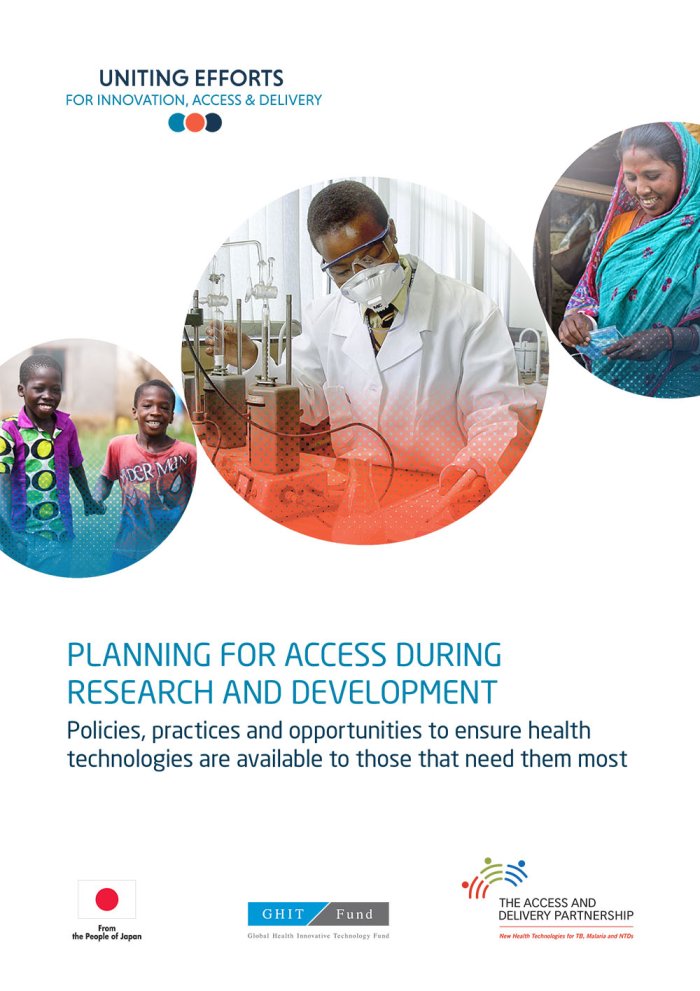
Uniting Efforts
The global response to the COVID-19 pandemic has highlighted how close collaboration among multiple stakeholders can overcome major hurdles to the development, approval and delivery of new medicines, vaccines and diagnostic tools. But opportunities for such intense collaboration are rare, and access to new health technologies remains uneven.
- Knowledge products
- Implementation Research Toolkit
- Pipeline analysis
- Digital Health for Development Hub
Knowledge products
ADP knowledge products advance learning and contribute to improved policies, programmes and practices, as well as demonstrate human impact on the ground.
Implementation Research Toolkit
This toolkit is designed to help teams conduct implementation research projects through a standard process to ensure reliable, high-quality results.
Pipeline analysis
This working paper provides a comprehensive survey of new medicines, diagnostics and vaccines for malaria, TB and selected NTDs, that are currently in the pipeline for market entry by 2020.
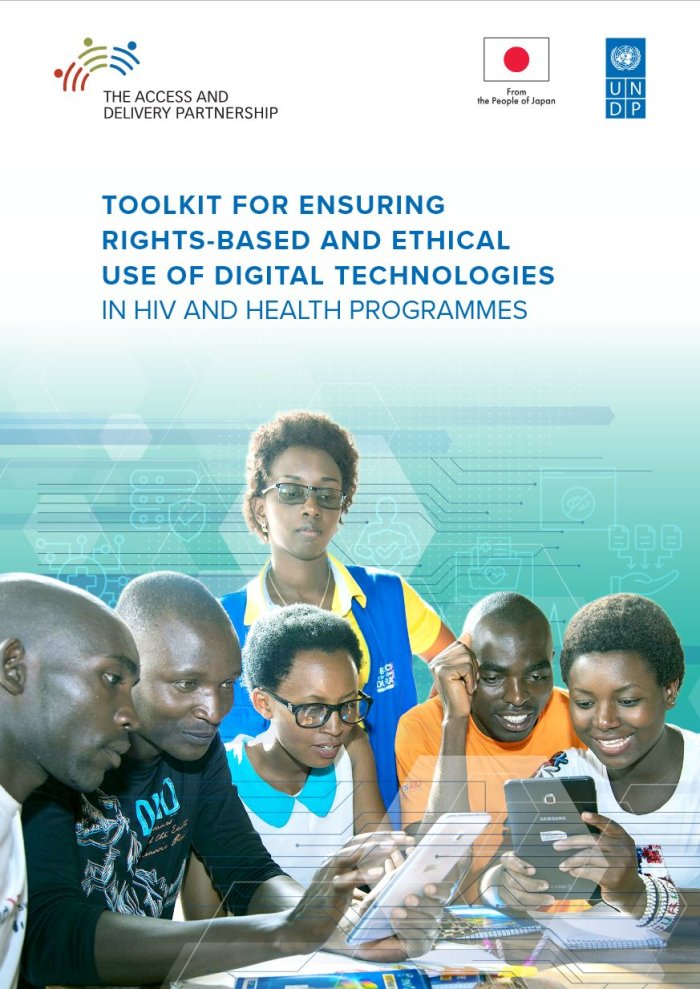
Digital Health for Development Hub
A one-stop shop with technical, advisory and partnership support for scaling up digital health solutions.